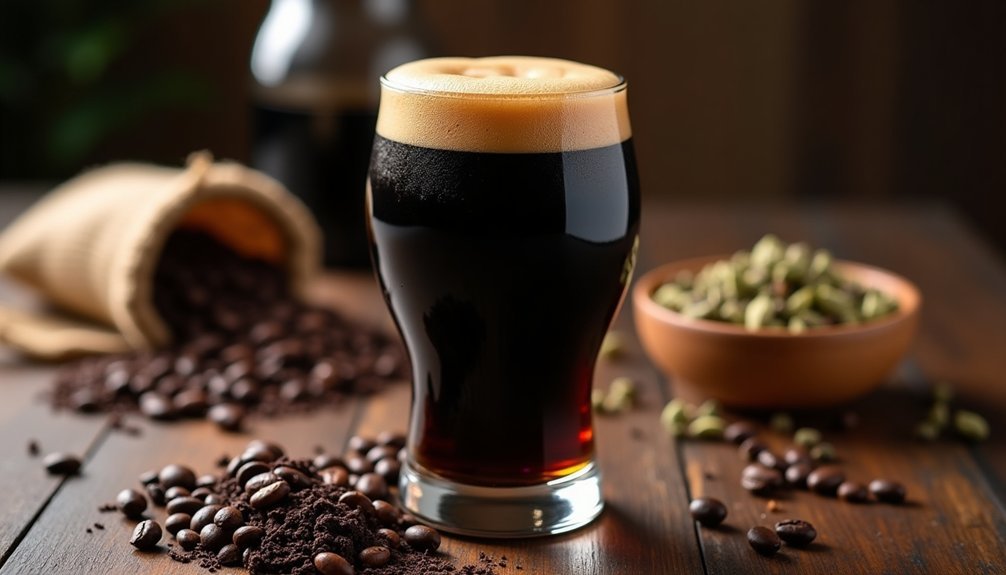
I’ve always found something magical about a well-crafted coffee stout – that perfect marriage between roasty beer and bold coffee notes that dance across your palate. This Liquid Awakening recipe isn’t just another beer; it’s a sensory experience that’ll have you savoring every sip. The secret lies in how the coffee is introduced, creating layers of flavor without harsh bitterness. Ready to discover what makes this particular brew worth clearing your weekend schedule for?
What Ingredients are in Dark & Bold Coffee Stout?
The Dark & Bold Coffee Stout is a rich, complex beer that combines the roasty flavors of dark malts with the aromatic punch of fresh coffee. This recipe creates a full-bodied stout with notes of chocolate, coffee, and a subtle hop character that balances the maltiness.
Perfect for cold evenings or as a dessert beer, the coffee addition gives this stout its distinctive character without overwhelming bitterness.
Ingredients:
- 10 pounds two-row malt (base malt)
- 1.25 pounds Munich malt (adds maltiness)
- 5 ounces 45°L crystal malt
- 5 ounces 150°L crystal malt
- 4 ounces roast barley (provides roasty flavor)
- 4 ounces chocolate malt (adds chocolate notes)
- 4 ounces black malt (contributes deep color)
- 4 ounces Simpsons brown (coffee) malt
- 2 ounces coarse ground coffee
- 0.25 ounce Magnum hops (bittering)
- 0.5 ounce Crystal hops (flavor)
- 1 ounce Crystal hops (aroma)
- White Labs 001 or Wyeast 1056 American Ale yeast
When selecting ingredients for this stout, the coffee quality matters tremendously. I recommend using a medium-dark roast coffee with chocolate or nutty undertones rather than a light roast.
Freshly ground coffee works best, ground just before adding to the beer. The combination of different malts might seem complex, but each contributes unique characteristics—the crystal malts add sweetness and body, while the darker malts provide the classic stout color and roasty flavors that complement the coffee addition.
How to Make this Dark & Bold Coffee Stout
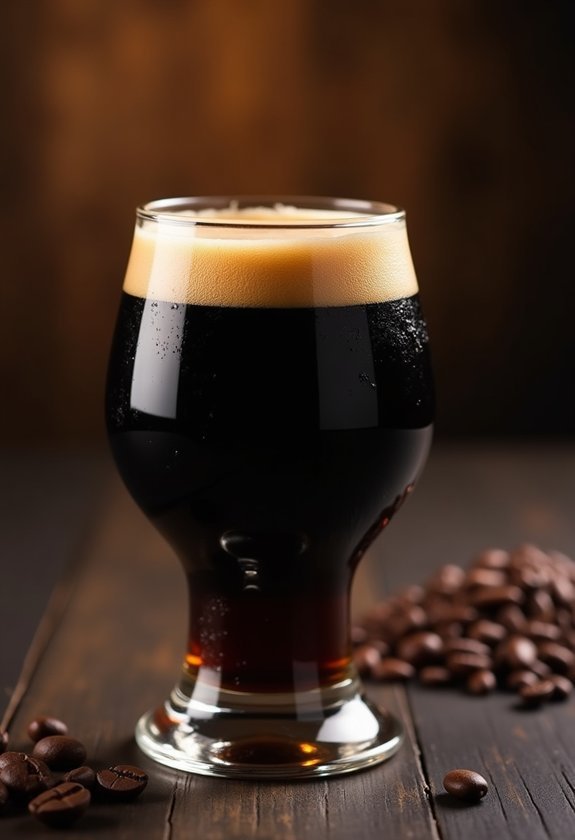
Brewing this coffee stout starts with the mash, where you’ll combine all your grains—10 pounds of two-row malt, 1.25 pounds of Munich malt, and all those specialty malts like the crystal malts, roast barley, chocolate malt, black malt, and Simpsons brown malt.
Heat your strike water to achieve a mash temperature of 151°F and hold it there for a full hour. This temperature is essential, not too high that you get too many unfermentable sugars, but not too low that you don’t get enough body. During this hour, the enzymes in the malt are converting starches to sugars, creating the foundation of your beer’s flavor.
After mashing, it’s time for the boil, where your hop schedule comes into play. Add 0.25 ounce of Magnum hops right at the beginning of the 60-minute boil—these are your bittering hops that counter the sweetness of the malt.
When 30 minutes remain, toss in 0.5 ounce of Crystal hops for flavor. Then, at the very end of the boil (what brewers call “flameout” or “knockout”), add the final 1 ounce of Crystal hops for aroma.
Now comes the coffee decision: you can either steep 2 ounces of coarsely ground coffee for just 2 minutes at knockout while the wort is still hot, or add it later during secondary fermentation. The brief contact time prevents extracting too much bitterness from the coffee.
Once cooled to pitching temperature, transfer your wort to the fermenter, add your White Labs 001 or Wyeast 1056 American Ale yeast, and ferment at about 68°F until fermentation is complete.
If you didn’t add coffee at knockout, now’s the time to add it to secondary—I recommend tasting the beer frequently during coffee infusion to get exactly the strength you want. Remember, it’s always easier to add more coffee than to try fixing a beer that’s become too coffee-forward.
Using premium home equipment can significantly elevate your brewing process, resulting in more consistent temperatures and better flavor extraction.
The result will be a deliciously complex stout with prominent coffee character balanced beautifully against the rich malt backdrop. And honestly, the hardest part might be waiting for it to carbonate and condition after bottling.
Substitutions and Variations
While following a recipe precisely often yields predictable results, exploring substitutions can transform your coffee stout into something uniquely yours.
I’m a firm believer in kitchen creativity, especially with this robust brew.
Can’t find Simpson’s brown malt? Try a bit more chocolate malt instead.
For coffee varieties, dark roasts create bold flavors, while medium roasts offer subtle notes. Experiment with specialty beans—Ethiopian for fruitiness or Colombian for nutty undertones.
You might swap Crystal hops for Cascade if you prefer citrusy hints.
And yeast substitutions? Wyeast 1968 London ESB creates a maltier profile with less attenuation.
What to Serve with Dark & Bold Coffee Stout
Since great food pairings can elevate your coffee stout experience to heavenly heights, I’ve gathered some perfect companions for this robust brew.
Dark chocolate desserts, with their bitter-sweet notes, create magic alongside the roasty coffee flavor profile. Why not try chocolate-dipped strawberries or a decadent brownie?
Savory options like smoked brisket or aged cheddar complement the stout’s richness beautifully.
For breakfast pairings (yes, I’m suggesting morning beer, don’t judge), nothing beats pecan waffles with maple syrup or a classic English breakfast.
The coffee notes in the stout practically demand these hearty companions.
Final Thoughts
After you’ve savored your last sip of this Dark & Bold Coffee Stout, you’ll understand why coffee and beer make such perfect companions.
The rich, roasty notes from the coffee blend seamlessly with the chocolate and caramel undertones of the stout.
I’m convinced this recipe strikes the perfect balance—bold enough to satisfy serious beer enthusiasts but approachable for those just dipping their toes into craft brewing.
Remember, brewing is part science, part art. Don’t be afraid to tweak the coffee amount to match your preference.
Isn’t that the beauty of homebrewing?
Cheers to your brewing adventure!