
I’ve always believed that a proper martini isn’t just a drink—it’s a moment of ritual elegance. You might think something with so few ingredients would be simple, but that’s the beautiful paradox of this classic cocktail. The perfect balance between gin (or vodka, if you prefer) and vermouth creates something far greater than the sum of its parts. The way the first sip coats your palate with botanical complexity makes you wonder: what other seemingly simple pleasures might we be overlooking in our rush through modern life?
What Ingredients are in Timeless Martini?
The classic martini is one of the most iconic and elegant cocktails in existence. Simple yet sophisticated, it has stood the test of time for good reason. With just a handful of ingredients, you can create a perfectly balanced drink that’s both invigorating and potent.
The beauty of the martini lies in its simplicity—a harmonious blend of spirits that allows the quality of each component to shine through.
- 2 oz gin or vodka (your preference)
- 1 oz dry vermouth
- Ice for mixing
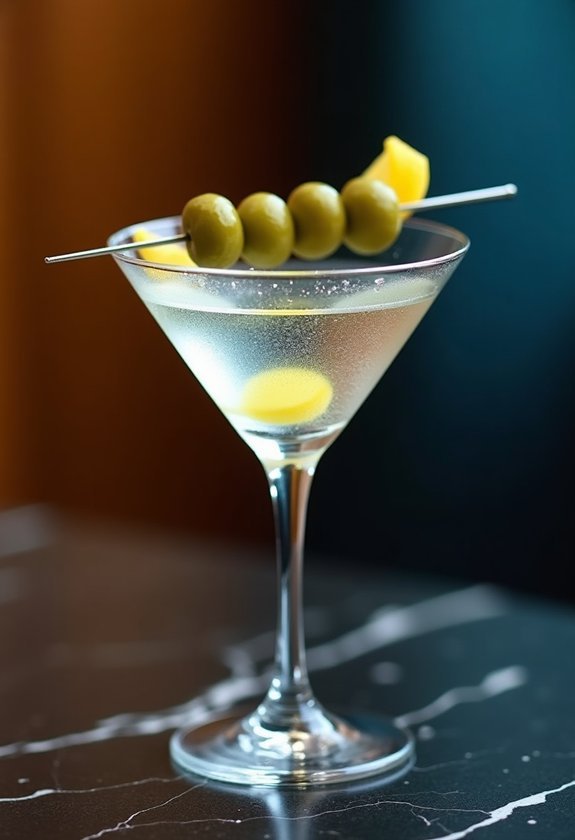
- Lemon twist or olives for garnish
When selecting your ingredients, quality really does make a difference. Opt for a premium gin if you prefer the botanical complexity it brings, or a smooth vodka if you want something cleaner and more neutral.
Your vermouth should be fresh—this fortified wine does go bad, so keep it refrigerated and use it within three months of opening.
And don’t overlook the garnish! The oils from a fresh lemon twist or the briny punch of good olives can transform the entire drinking experience. Remember, with so few ingredients, each one plays a vital role in creating the perfect martini.
How to Make this Timeless Martini
Making the perfect martini isn’t just about throwing ingredients together—it’s a ritual that deserves respect. Start by filling a mixing glass with plenty of ice. The ice serves an essential purpose: it not only chills your cocktail but also provides the right dilution as you stir.
Next, pour in 2 oz of your chosen spirit (gin for traditionalists, vodka for those who prefer a cleaner taste) and 1 oz of dry vermouth. The ratio is important here, folks. Too much vermouth and you’ll overwhelm the delicate balance; too little and you might as well be drinking straight spirits.
Now comes the technique that separates the amateurs from the pros—stirring. Using a long bar spoon, stir the mixture gently but consistently for 30-45 seconds. Not shaking, mind you. A proper martini is stirred, not shaken (despite what a certain British spy might tell you). This method guarantees your cocktail achieves the silky texture and perfect clarity that martini lovers crave.
For a truly elevated experience, consider investing in a premium cocktail shaker set that includes proper mixing glasses and precision strainers.
Once properly chilled, strain the mixture into a martini glass that’s been waiting patiently in the freezer. The final touch? Garnish with either a lemon twist, which adds a bright citrus note as the oils release over the surface, or olives (one or three, never two—it’s bad luck) for that classic briny finish. The choice reflects your personality as much as your palate.
Substitutions and Variations
While I’ve shared the classic recipe, a martini’s beauty lies in its adaptability to personal preference.
Don’t have gin? Vodka creates a smoother, less botanical version. Prefer it dirtier? Add olive brine to taste—a tablespoon is my starting point for a properly briny kick.
For a Gibson, swap olives for cocktail onions.
Want it perfect? Equal parts gin and vermouth. Drier? Less vermouth. Wetter? More vermouth.
A dash of orange bitters adds complexity, while a splash of Lillet Blanc instead of vermouth creates a Vesper—James Bond’s famous choice.
The possibilities? Nearly endless.
What to Serve with Timeless Martini
So you’ve mastered the perfect martini—now what pairs with this sophisticated sip?
I always recommend classic, salty nibbles that complement rather than overwhelm. Think high-quality olives (those Castelvetranos are divine), marcona almonds, or thinly sliced prosciutto wrapped around breadsticks.
For something more substantial, oysters on the half shell create a luxurious pairing—briny, fresh, with just a squeeze of lemon.
Simple cheese straws or water crackers with a mild cheese work beautifully too.
Final Thoughts
The humble martini stands as a tribute to the beauty of simplicity in cocktail making.
I find something magical about how just a few quality ingredients can create such an iconic drink.
When you’re stirring that perfect balance of gin and vermouth, you’re connecting with generations of cocktail lovers before you.
Isn’t there something wonderfully meditative about the ritual?
The careful measuring, the gentle stirring, the delicate pour.